

Traditional gypsy tattoos have deep roots in American and European tattoo culture, particularly within the realm of old-school tattooing. These designs, popularized during the early to mid-20th century, typically feature the portrait of a mysterious woman adorned with colorful accessories and elaborate headdresses. The style draws inspiration from the romanticized imagery of Romani people, though it’s important to note that these designs are artistic interpretations rather than authentic cultural representations.
Symbolic Meanings and Interpretations
The gypsy woman tattoo carries various symbolic meanings that have evolved over time. These tattoos often represent:
- Freedom and wanderlust
- Fortune-telling and mysticism
- Independence and strength
- Beauty and femininity
- Adventure and travel
- Protection and guidance
The incorporation of specific elements within these tattoos can add layers of meaning. For instance, roses might symbolize love and beauty, while cards or crystal balls represent divination and fate.
Popular Design Elements and Styles
Traditional Style
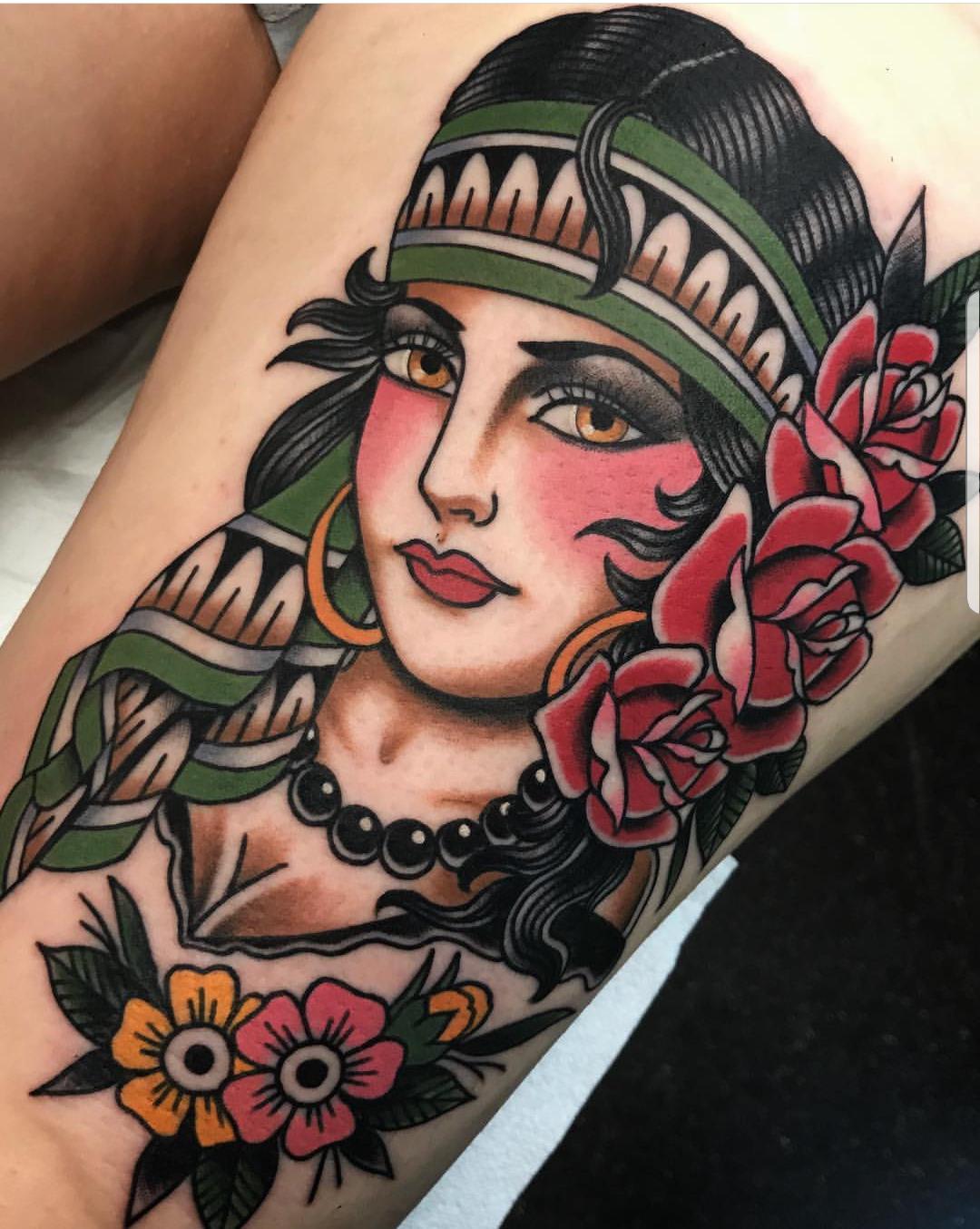
The classic American traditional gypsy tattoo features bold outlines, limited color palettes, and simplified shapes. These designs typically showcase:
- A woman’s portrait with defined facial features
- Ornate jewelry and accessories
- Colorful head scarves or bandanas
- Traditional roses and other decorative elements
Neo-Traditional Interpretation
Modern artists have reimagined the classic design with neo-traditional elements, incorporating:
- More detailed shading and color work
- Realistic facial features
- Intricate patterns and backgrounds
- Contemporary symbolic elements
Placement and Sizing Considerations
Gypsy tattoos are versatile in terms of placement, though certain locations have become traditional favorites:
- Upper arm or bicep
- Forearm
- Thigh
- Back
- Chest
The size typically ranges from medium to large, allowing for detailed portraiture and surrounding elements. Most artists recommend a minimum size of 5-6 inches to maintain the integrity of the portrait’s details.
Color Schemes and Artistic Techniques
Traditional gypsy tattoos often employ a specific color palette that includes:
- Rich reds and burgundies
- Deep blues and greens
- Golden yellows
- Black for strong outlines
- Skin breaks for highlights
Artists use various techniques to create depth and dimension:
- Bold line work
- Smooth color gradients
- Strategic negative space
- Whip shading
- Color packing
Modern Interpretations and Contemporary Trends
Today’s tattoo artists continue to evolve the traditional gypsy design while maintaining its core elements. Contemporary trends include:
- Blackwork interpretations
- Minimalist designs
- Watercolor effects
- Geometric incorporation
- Custom cultural elements
Choosing Your Gypsy Tattoo Design
When planning your gypsy tattoo, consider:
- Style preference (traditional vs. neo-traditional)
- Size and placement
- Color scheme
- Personal symbolic elements
- Artist specialization
Aftercare and Maintenance
To ensure your gypsy tattoo remains vibrant:
- Follow proper healing instructions
- Protect from sun exposure
- Moisturize regularly
- Touch up when needed
- Avoid excessive scratching or picking
Cultural Considerations
While gypsy tattoos are popular in contemporary tattoo culture, it’s important to approach the subject with respect and understanding. These designs represent artistic interpretations rather than authentic Romani cultural elements.




Finding the Right Artist
Select an artist who:
- Specializes in portraiture
- Has experience with traditional or neo-traditional styles
- Can show a portfolio of similar work
- Understands color theory and skin tones
- Maintains proper hygiene and safety standards