

Everyone talks about tattoos aging poorly. Faded lines, blurry edges, colors that turn muddy after a decade. And yet, there’s one style that was practically engineered to stand the test of time. The American traditional tattoo isn’t just a design choice – it’s basically a philosophy of permanence in an art form that’s, well, literally permanent.
What is an American Traditional Tattoo
The History Of American Traditional Tattoos
The roots of American traditional tattoos trace back to the late 19th century, when sailors returned from Pacific voyages carrying tattooing techniques influenced by indigenous cultures. According to The Honorable Society, Sailor Jerry refined the style during the 1930s, establishing the bold lines and vibrant colors that define the look today. But here’s what most people miss – American traditional tattoos started as identification marks among sailors. Think about that for a second. These weren’t decorative choices. They were survival tools.
The evolution of tattoo technology in the 19th century, including the electric tattoo machine, played a massive role in popularizing this style. What sailors scratched out by hand could suddenly be replicated with precision and speed. The style crystallized.

Bold and Timeless Tattoos
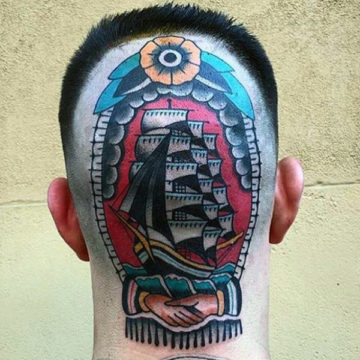
The appeal runs deeper than aesthetics. These designs tell stories. Courage. Love. Personal history. A swallow tattooed on a sailor’s chest meant he’d traveled 5,000 nautical miles. An anchor signified stability amid chaos. Key motifs – eagles, roses, nautical themes – reflect maritime culture and military traditions that span generations.
American traditional tattoos feature clean, bold black outlines and solid pigments. This isn’t arbitrary. It enhances longevity. Those thick lines don’t blur into mush like fine-line work tends to after fifteen years. Founding artists like Sailor Jerry and Don Ed Hardy contributed to mainstream acceptance of tattooing itself – turning what was once countercultural into something your grandmother might actually compliment.
Key Characteristics of American Traditional Tattoos
Bold Black Outlines and Line Work
The thick black outline is the skeleton of every American traditional tattoo. Without it, nothing holds together. I’ve seen artists try to “modernize” traditional pieces by thinning the outlines. Five years later, those tattoos look like watercolors left in the rain. Don’t bother with subtle line work until you’ve mastered the bold stuff. The outline does the heavy lifting.
Line weight matters too. Traditional tattoo designs use consistent, heavy strokes that create immediate visual impact from across the room. Subtlety is not the goal here. Punch is.
Traditional Tattoo Color Palette
The traditional tattoo color palette operates on strict principles. Red, yellow, green, blue – and that’s largely it. This limited selection exists for good reason.
Queens Gambit Tattoo explains the formula: one-third black, one-third color, one-third skin breaks. This ratio creates visual breathing room and ensures the tattoo ages gracefully. Sailor Jerry expanded the palette in the 1940s to include pthalo green, blue, and purple while maintaining the foundational warmth of red, yellow, and brown.
Color meanings run deep in this tradition. Red symbolizes courage and passion. Yellow represents renewal and clarity. Blue speaks to tranquility and wisdom. When Lone Star Tattoo discusses color theory in traditional tattoos, they emphasize how bold, saturated colors ensure visibility for decades.

Simplified Design Elements
Complexity is the enemy of longevity in tattooing. Traditional designs strip subjects down to essential forms. A rose becomes a specific configuration of curves and points. An eagle follows established proportions that artists have refined over a century. This simplification isn’t limitation – it’s distillation.
Two-Dimensional Flat Appearance
American traditional tattoos embrace flatness unapologetically. No realistic shading. No gradient fades attempting to mimic three dimensions. The flat appearance creates graphic impact and – crucially – ages predictably. What drives me crazy is when people dismiss this as “less artistic.” It takes tremendous skill to create visual depth using only flat color fields and line weight.
Sailor Jerry Tattoo Style Influence
Norman “Sailor Jerry” Collins didn’t just practice the sailor jerry tattoo style – he invented significant portions of it. His innovations in color mixing, equipment sterilization, and design composition established standards that american traditional tattoo artists still follow. His influence is inescapable. Walk into any traditional shop, and you’ll see his aesthetic DNA everywhere.

Popular Traditional Tattoo Designs and Their Meanings
Nautical Symbols
- Anchors: Stability and groundedness – the thing that keeps you from drifting
- Ships: Adventure, life’s journey, willingness to voyage into unknown waters
- Swallows: Safe return home – sailors earned these through miles traveled
- Compass roses: Guidance and finding your way

Pin-Up Girls and Portraits
Pin-up girl designs represented idealized femininity and reminded sailors of home during long voyages. Today they symbolize beauty, admiration, and often serve as tributes to loved ones. The stylization follows strict traditional rules – bold outlines, limited color palette, specific proportions.

Eagles and Birds
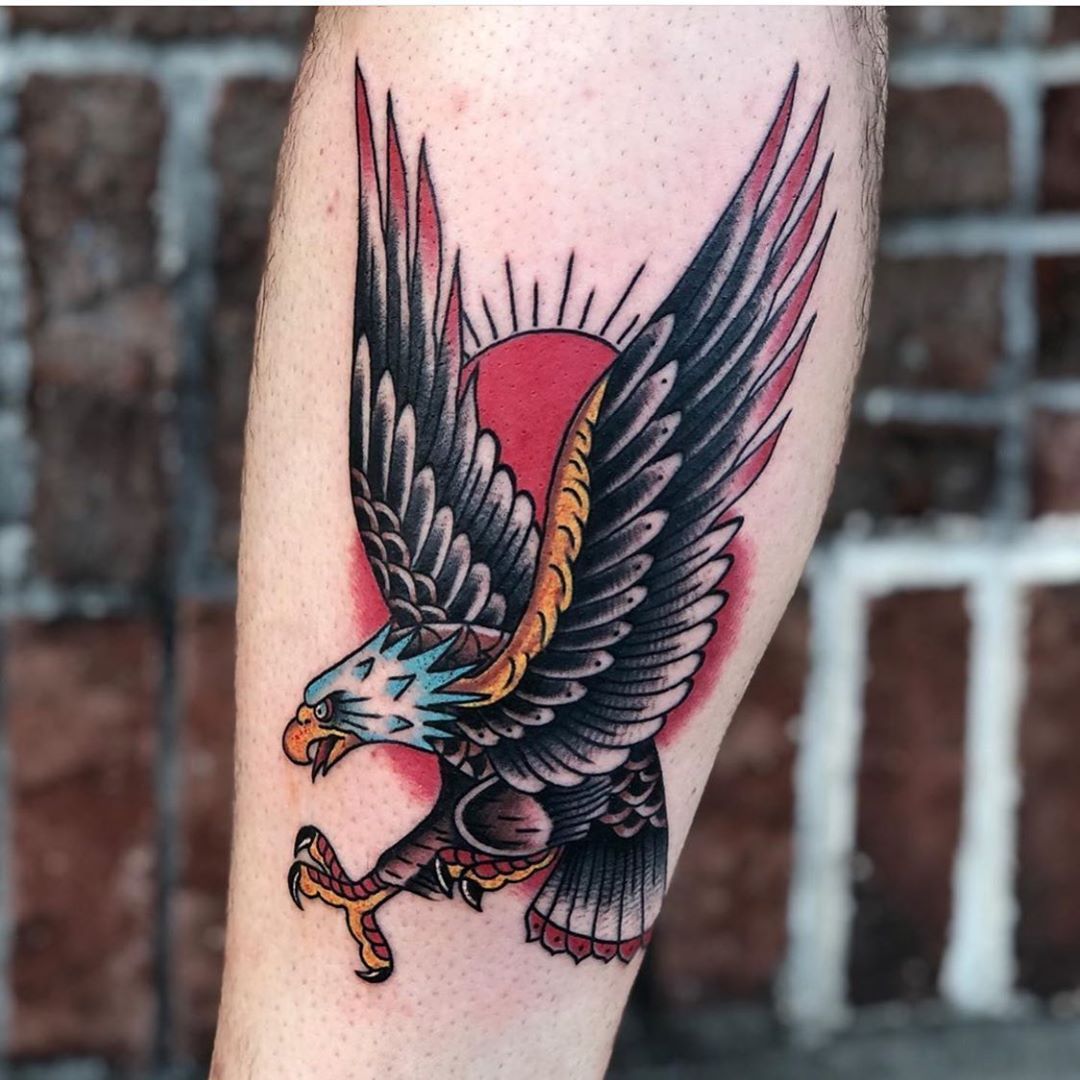
Eagles represent freedom, patriotism, and power. They’re probably the most requested American traditional motif after roses. Birds in general symbolize freedom from earthly constraints – a fitting sentiment for people marking their bodies permanently.
Hearts and Roses
Hearts speak to love – romantic, familial, self-directed. Roses communicate beauty intertwined with danger (those thorns aren’t accidental). Together, they create the classic “love hurts but it’s beautiful” narrative that resonates across generations.

Daggers and Skulls
Daggers symbolize betrayal, bravery, or military service depending on context. Skulls acknowledge mortality directly. A dagger through a heart? Betrayal in love. A dagger through a skull? Defiance of death itself.

Traditional Tattoo Flash Sheets
Traditional tattoo flash sheets are basically menus displayed on shop walls – pre-drawn designs customers can choose and get tattooed immediately. They originated from practical necessity. Sailors had limited shore leave. There was no time for custom consultations. Flash allowed artists to work efficiently while maintaining quality.
Today, flash sheets represent design heritage and serve as artist portfolios. Choosing from flash isn’t “settling” – it’s participating in tradition.
Getting Your American Traditional Tattoo
Finding American Traditional Tattoo Artists
Not every tattooist can execute traditional work properly. Look for portfolios demonstrating consistent line weight, properly saturated colors, and designs that read clearly. Ask how long they’ve been specializing in traditional work specifically. The best american traditional tattoo artists have apprenticed under masters and understand the style’s historical context.
Placement Considerations
Traditional tattoos work best on flat, relatively stable body surfaces. Upper arms. Calves. Back. Chest. Areas that won’t stretch dramatically or fold on themselves constantly. Placement affects how the bold lines read and how colors settle over time.
Sizing and Composition
Go bigger than you think. Those bold lines need room to breathe. A traditional rose shrunk to two inches loses impact entirely. The composition should fill its space confidently without cramming details into corners.
Aftercare for Bold Lines
Bold lines need proper healing to maintain their crispness. Keep the tattoo moisturized but not drowned. Avoid sun exposure during healing. Don’t pick at scabbing – it pulls ink out and creates gaps in lines. Simple advice, but the number of ruined traditional pieces from poor aftercare is genuinely frustrating.
Conclusion
The American traditional tattoo represents more than aesthetic preference. It’s a commitment to permanence executed through a visual language refined over a century. Bold outlines that don’t blur. Colors that stay vibrant. Designs that communicate clearly from across any room. There’s a reason this style has survived while countless trends have faded.
Frequently Asked Questions
How much do American traditional tattoos typically cost?
Expect to pay between $150 and $300 per hour depending on artist experience and location. Simple flash pieces might run $100-$200 total. Larger custom work easily reaches $500+.
Do American traditional tattoos age better than other styles?
Yes. Those bold lines and saturated colors were specifically designed for longevity. While fine-line tattoos blur within years, properly executed traditional work remains readable for decades.
Can I mix American traditional with other tattoo styles?
Possible but tricky. The bold traditional aesthetic clashes with delicate styles. Mixing with neo-traditional or Japanese works better than combining with watercolor or micro-realism.
What’s the difference between American traditional and neo-traditional?
Neo-traditional uses similar subject matter but incorporates broader color palettes, more detailed shading, and contemporary design elements. Traditional stays within classic parameters. Neo-traditional expands them.
Are American traditional tattoos suitable for first-timers?
Absolutely. They’re actually ideal. The designs are tested by time, age predictably, and the straightforward process helps newcomers understand what getting tattooed involves without overwhelming complexity.